


The cryptocurrency market is filled with ambitious projects, but only a few have managed to build real utility and large-scale adoption. TRON (TRX) is one of them. Known for its high transaction speed, low fees, and growing ecosystem, TRON has positioned itself as a practical blockchain for payments, DeFi, and stablecoin transfers.
As traders explore new ways to generate returns, platforms offering digital trading with fixed returns have gained attention. In such environments, understanding the underlying blockchain infrastructure—like TRON—is critical, because speed, fees, and liquidity directly impact trading outcomes.
In this article, we’ll break down TRON’s technology, ecosystem, real-world use cases, and how it connects to modern trading strategies.
What Is TRON?
TRON is a decentralized blockchain platform designed to support high-throughput applications, including payments, smart contracts, and decentralized finance (DeFi).
Core Goals
- Fast transactions
- Low fees
- High scalability
- Decentralized content and financial systems
The native token of the network is TRX, which powers transactions and governance.

Why TRON Stands Out
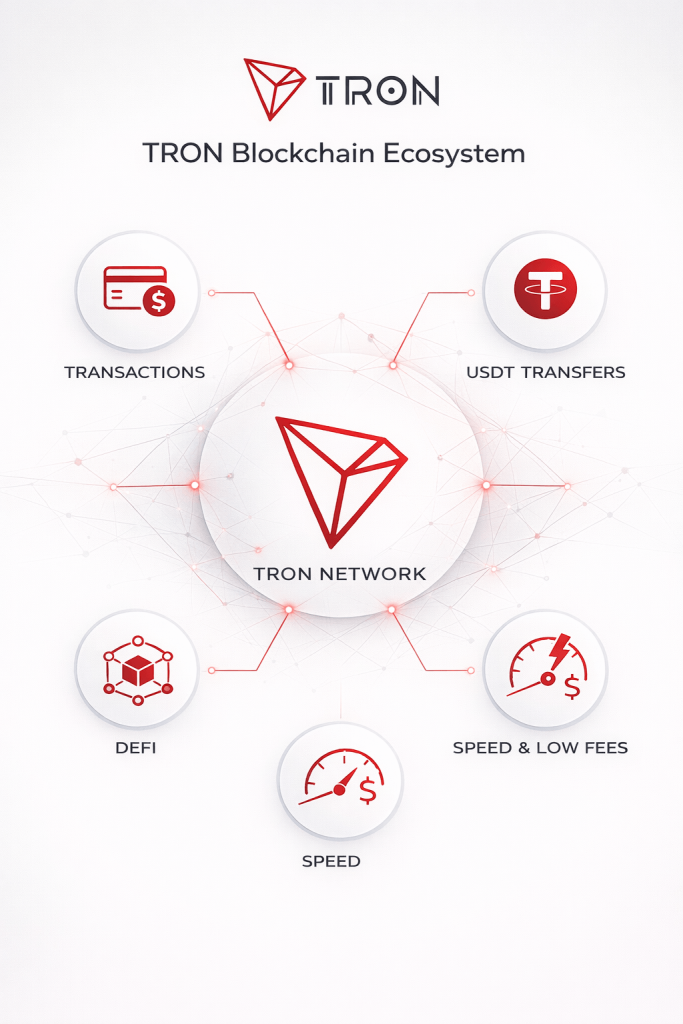
Unlike many blockchains that struggle with congestion and high costs, TRON focuses on efficiency.
Key Advantages
- Near-zero transaction fees
- High transaction speed
- Strong stablecoin ecosystem (USDT on TRON)
- Wide adoption for transfers
These features make TRON particularly attractive for traders and businesses.
How TRON Works
TRON uses a Delegated Proof of Stake (DPoS) consensus mechanism.
Key Components
- Super Representatives — validate transactions
- TRX holders — vote for representatives
- Smart contracts — power decentralized apps
| Component | Function |
|---|---|
| TRX Token | Transaction fees and governance |
| DPoS | Consensus mechanism |
| Smart Contracts | Decentralized applications |
This structure allows TRON to process transactions quickly and efficiently.
TRON Ecosystem
TRON has developed a diverse ecosystem over time.
- DeFi platforms
- Stablecoin transfers (especially USDT)
- Gaming and entertainment apps
- NFT marketplaces
One of TRON’s biggest strengths is its role in stablecoin transactions.
TRON and USDT Dominance
TRON has become a leading network for USDT transfers.
Why?
- Lower fees compared to Ethereum
- Faster confirmation times
- Wide exchange support
For traders, this means:
- Cheaper transfers between platforms
- Faster capital movement
- Improved liquidity access
TRON vs Other Blockchains
| Feature | TRON | Ethereum | Solana |
|---|---|---|---|
| Transaction Fees | Very low | High | Low |
| Speed | High | Moderate | Very high |
| Adoption | Strong (payments) | Strong (DeFi) | Growing |
TRON excels in efficiency and cost.
Trading TRX: Key Insights
From a trading perspective, TRX behaves differently from many altcoins.
Characteristics
- Lower volatility compared to smaller tokens
- Strong correlation with overall market trends
- Driven by ecosystem growth and adoption
Understanding these patterns helps build better strategies.
Short-Term vs Long-Term Strategies
Short-Term Trading
- Focus on technical analysis
- Use volatility spikes
- Monitor market sentiment
Long-Term Holding
- Benefit from ecosystem growth
- Use staking or passive income options
- Focus on adoption metrics
Each approach requires different skills and discipline.
TRON in Fixed Return Trading Environments
TRON’s fast and low-cost infrastructure makes it attractive in environments where timing and execution are critical.
In fixed-return trading setups:
- Fast transactions reduce delays
- Low fees improve net returns
- Liquidity ensures smooth execution
This is why infrastructure matters just as much as strategy.
Risk Management in TRON Trading
Even with a strong blockchain, risks remain.
| Risk | Description |
|---|---|
| Market volatility | Price fluctuations |
| Regulatory risk | Changing legal frameworks |
| Platform risk | Exchange or wallet issues |
| Network risk | Technical vulnerabilities |
Managing these risks is essential for long-term success.
Common Mistakes Traders Make
- Ignoring fundamentals
- Overtrading
- Chasing short-term gains
- Underestimating fees (on other networks)
Discipline remains the key factor.
The Psychology of Trading TRON
TRON’s stability compared to smaller tokens can lead to different psychological challenges.
- Impatience due to slower price movement
- Overconfidence in “safe” assets
- Ignoring broader market signals
A structured approach helps avoid these traps.
The Future of TRON
TRON continues to expand its ecosystem.
- Growth in DeFi applications
- Expansion of stablecoin usage
- Increased adoption in emerging markets
Its focus on efficiency positions it well for long-term relevance.
Conclusion: Infrastructure Matters
TRON is not just another cryptocurrency—it’s a practical blockchain designed for real-world use.
For traders, it offers advantages in speed, cost, and accessibility.
But as always, success depends not on the asset alone—but on how it’s used.
Because in modern markets, the edge doesn’t come from speculation.
It comes from understanding the system behind the trade.